Watch the video at the end of this article.
Introduction
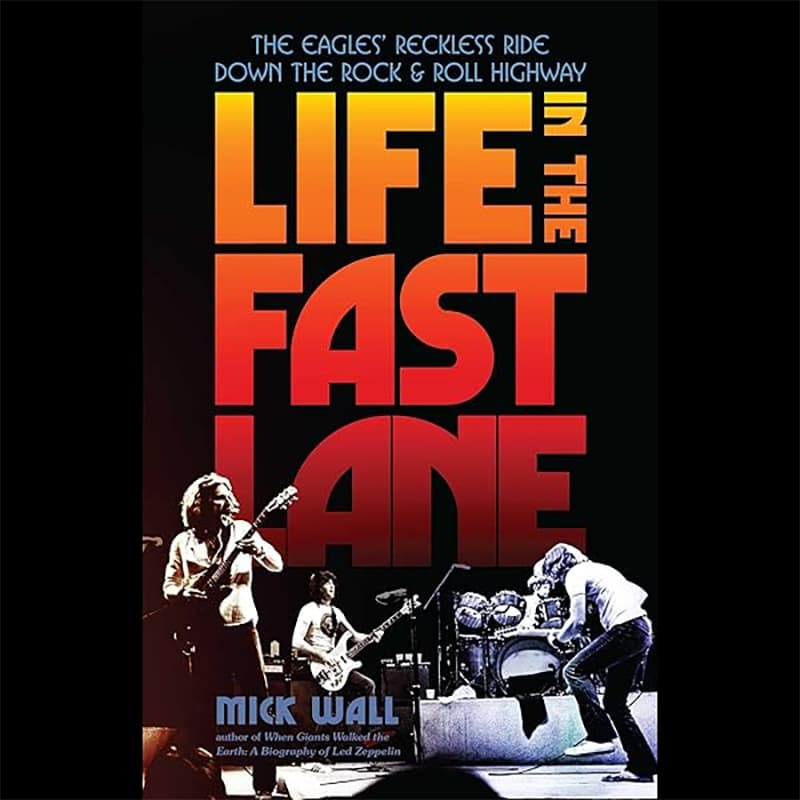
The Eagles’ “Life in the Fast Lane,” released in 1976 on their landmark album Hotel California, stands as one of the most electrifying expressions of American rock excess and moral warning ever recorded. Built around a blistering guitar riff by Joe Walsh and a driving rhythm section, the song captures the seductive chaos of a lifestyle fueled by speed, ambition, and self-destruction. More than just a rock anthem, it is a sharp psychological portrait of people who chase intensity without considering the cost.
At its core, the song explores the illusion of control in a world that moves too fast. The lyrics describe a couple caught in a relationship defined by adrenaline, material pleasure, and constant motion. What begins as excitement gradually reveals itself as emptiness masked by noise and speed. The phrase “life in the fast lane” becomes both a celebration and a warning—suggesting that what feels like freedom can quickly turn into a trap.
Musically, the track is driven by tension and momentum. The opening guitar riff immediately signals urgency, almost like engines revving before a race. Don Henley’s vocal delivery is sharp and urgent, reflecting both fascination and concern. Joe Walsh’s guitar work adds a raw edge, pushing the song forward with relentless energy. The production, handled by Bill Szymczyk, emphasizes clarity and punch, making every instrument feel like part of a high-speed machine.
Lyrically, the Eagles use vivid imagery to show the consequences of excess. The characters in the song are not just enjoying life—they are consuming it at full throttle, unaware of the crash that may follow. Lines about money, desire, and reckless behavior reflect the broader cultural mood of the 1970s, a time when American rock music often mirrored both glamour and disillusionment.
What makes “Life in the Fast Lane” endure is its balance of thrill and critique. It does not simply condemn the fast life; it seduces the listener with it. The music feels exciting, even as the message warns of danger. This duality is a hallmark of the Eagles’ storytelling on Hotel California, where beauty and darkness often coexist.
Decades later, the song remains relevant because its theme is timeless. In today’s world of constant acceleration—social media, instant gratification, and nonstop competition—the idea of “life in the fast lane” feels even more literal. The Eagles captured not just a moment in rock history, but a recurring human pattern: the pursuit of speed as a substitute for meaning.
Ultimately, “Life in the Fast Lane” is more than a rock classic. It is a mirror held up to ambition itself, reminding listeners that moving too fast can make you forget where you are going—and why you started in the first place.