Watch the video at the end of this article.
Introduction
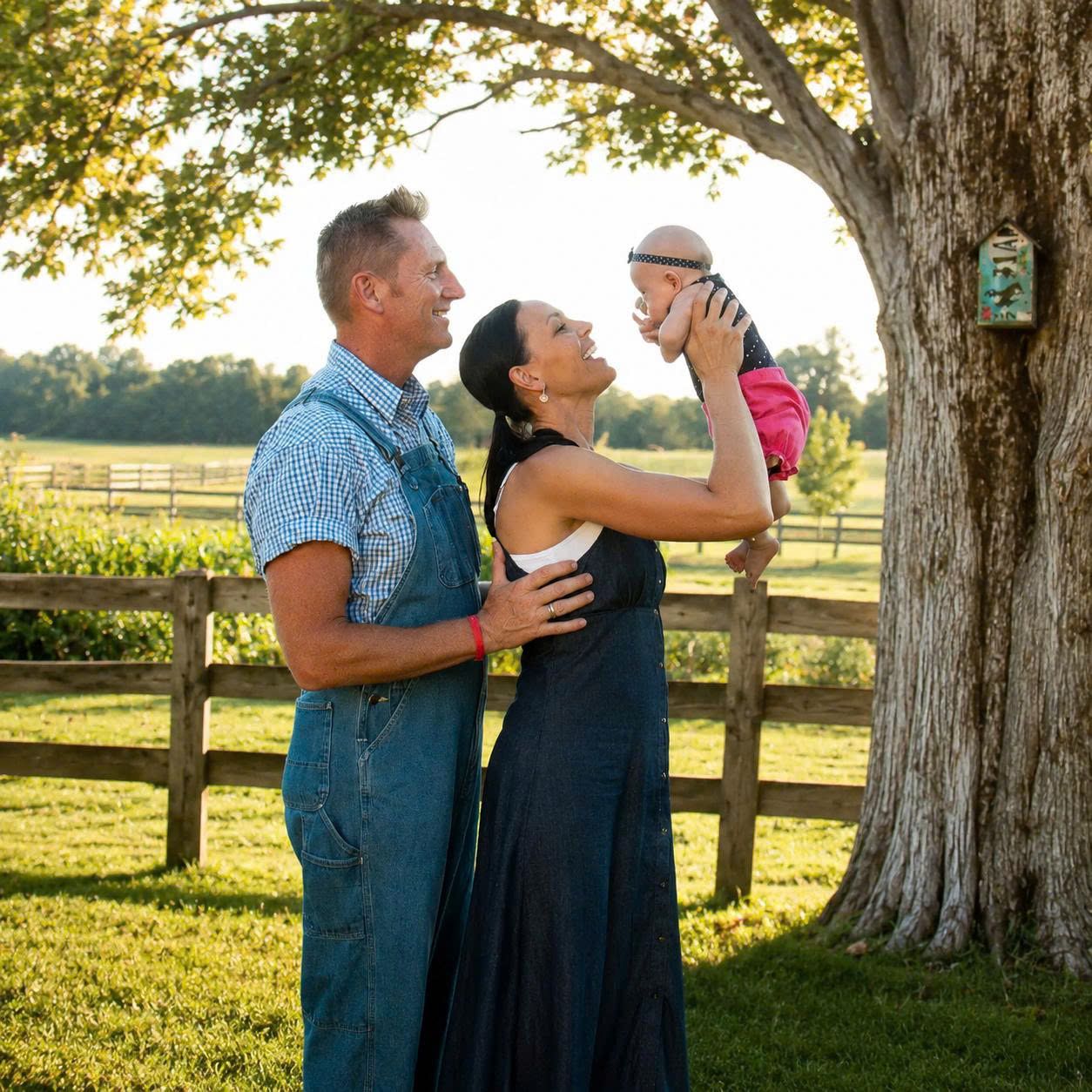
With our baby due in just a few weeks, life seemed to be standing at the edge of an overwhelming change. We knew that once she arrived, everything would be different: our routines, our priorities, our sense of time, and even the way we understood home. Instead of rushing back into the busy rhythm we had known before, we made a decision that felt both brave and necessary. We would take a year off to be with our daughter, to watch her grow through those precious first months, and to learn how to build a slower, simpler, and more intentional life together.
The idea was not to escape responsibility, but to redefine it. We wanted to be present for the quiet moments that are so easy to miss: the first sleepy smile, the tiny hand wrapped around a finger, the late-night feedings, the first laugh, and the discovery of the world through a child’s eyes. We understood that the year might not be easy. There would be exhaustion, uncertainty, financial adjustments, and days when our plans would fall apart. Yet we also knew that time with a newborn could never be recovered once it had passed. Choosing to step away from our work felt like choosing a kind of wealth that could not be measured in money.
At the same time, we wanted to simplify our lives and learn how to homestead. For us, homesteading was not about achieving complete independence overnight. It was about becoming more connected to the land, our food, our home, and one another. We imagined growing vegetables in a garden, learning to preserve seasonal produce, baking bread, cooking more meals from scratch, and repairing things instead of immediately replacing them. We wanted to reduce waste, spend less, and become more grateful for what we already had.
The farmhouse became the heart of this new beginning. Every room seemed to hold a promise. The kitchen would become a place of nourishment and experimentation. The garden would teach us patience, because seeds cannot be hurried. The changing seasons would remind us that growth often happens slowly and invisibly before it appears. Even ordinary chores—watering plants, hanging laundry, preparing meals, or caring for animals—could become meaningful when done with attention.
Of course, simplifying life did not mean that life would become simple. A baby would bring unpredictable nights and emotional days. A garden could fail. Bread might not rise. Plans could be interrupted by weather, illness, or fatigue. But perhaps that was part of the lesson. We were not searching for a perfect life. We were searching for a more honest one, shaped by presence, resilience, and love.
As the due date drew closer, we felt nervous, excited, and deeply grateful. We were preparing not only for the birth of our daughter, but also for the birth of a new way of living. The year ahead would ask us to slow down, learn new skills, accept mistakes, and trust the process. Most importantly, it would give us the chance to become a family without constantly feeling rushed.
We did not know exactly what the next twelve months would bring. Still, we knew why we were choosing them: to be there, fully and faithfully, for our baby, for each other, and for the quiet life we hoped to create.