Watch the video at the end of this article.
Introduction
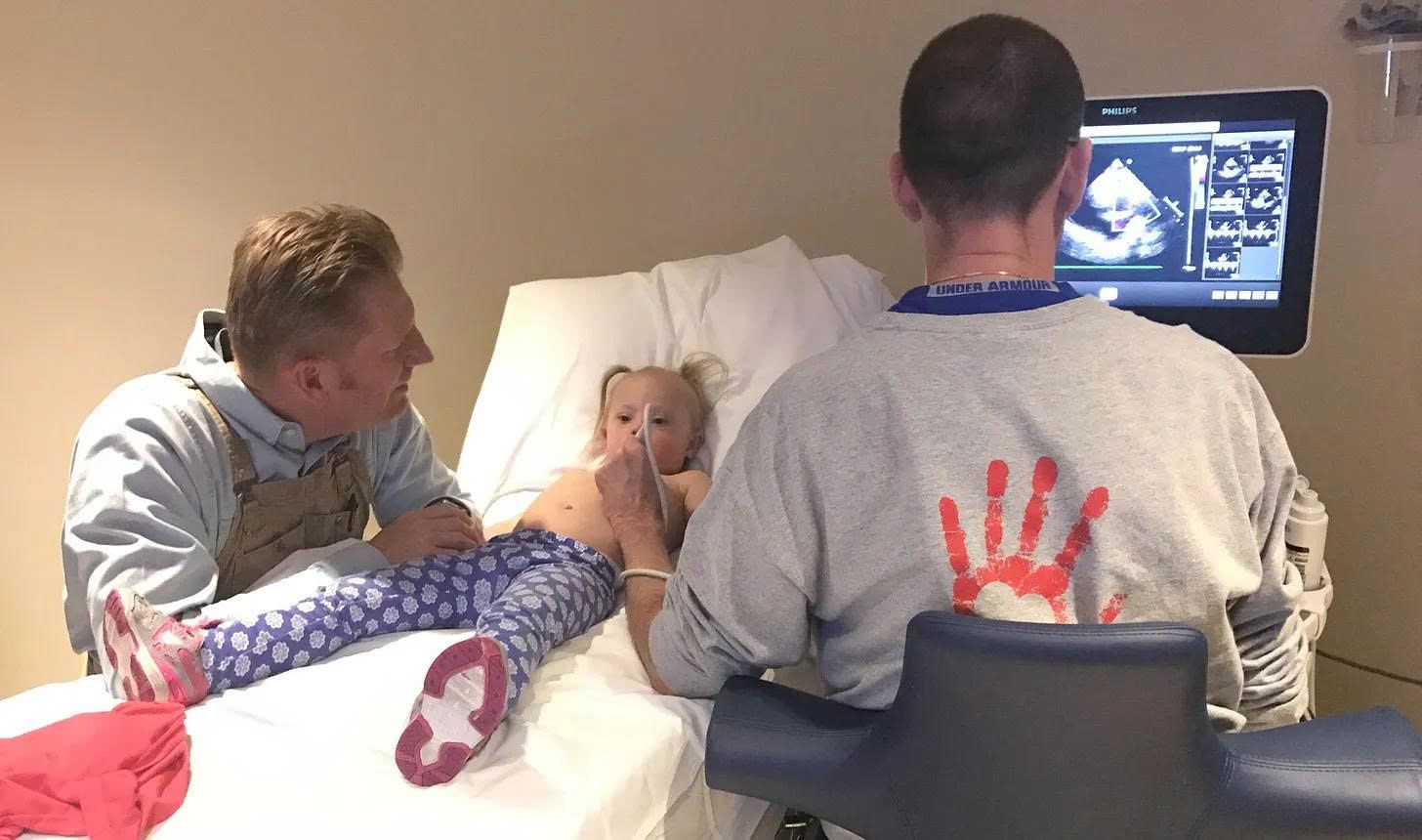
Ultimately, the hole in Indiana’s heart continued to be there. It never became any larger, which was something we were grateful for, but it also did not close on its own as we had hoped. For years, we lived with the understanding that the ventricular septal defect was small and stable, and that monitoring would be enough. Each echocardiogram brought a mixture of relief and uncertainty. We were thankful that the condition had not worsened, yet every appointment reminded us that the hole was still present and that her heart was still working differently from most. As Indiana grew older, the doctors began to notice that the defect, although unchanged in size, was starting to create a few complications. The blood flowing through the opening caused extra strain in certain parts of her heart, and over time that additional work began to matter. What had once seemed like a minor issue that might simply disappear became something that required serious attention. The change was not dramatic or immediate. There was no single frightening moment when everything suddenly became worse. Instead, the concerns developed gradually, appearing in small details on tests and in careful comments from her cardiology team. That slow progression was difficult in its own way because it meant learning to live with questions that did not have simple answers. We began to understand that a heart defect does not need to grow larger to become more significant. Sometimes the body changes around it, and a problem that was manageable in infancy can create new challenges as a child becomes bigger, stronger, and more active. The doctors watched for signs of pressure changes, enlargement, valve problems, and other effects that could develop because of the unusual blood flow. Every new concern made us more aware of how important those years of follow-up had been. Without regular echocardiograms, the complications might have gone unnoticed until they became serious. At the same time, we tried not to let the medical language define Indiana or take away from the joy of watching her grow. She was still the same bright, determined, loving child she had always been. She continued to laugh, learn, play, and bring light into our family, even while we carried the quiet knowledge that her heart might eventually need help. As parents, we found ourselves balancing hope with responsibility. We wanted to believe that everything would remain stable, but we also had to listen carefully to the doctors and prepare ourselves for the possibility of treatment. The hole had not become larger, yet its long-term presence was beginning to affect the heart in ways that could no longer be ignored. That realization was sobering, but it also gave us clarity. We knew that continuing to watch and wait without considering the next step might not be enough forever. Sometimes progress means accepting that a condition has changed, even when the original defect looks exactly the same. The complications reminded us that stability on paper does not always mean the body is unaffected. They also reminded us how fortunate we were to have specialists following Indiana closely and explaining each development with patience. Although the future felt uncertain, we were determined to face it with faith, careful information, and the same love that had always carried us from the beginning.