Watch the video at the end of this article.
Introduction
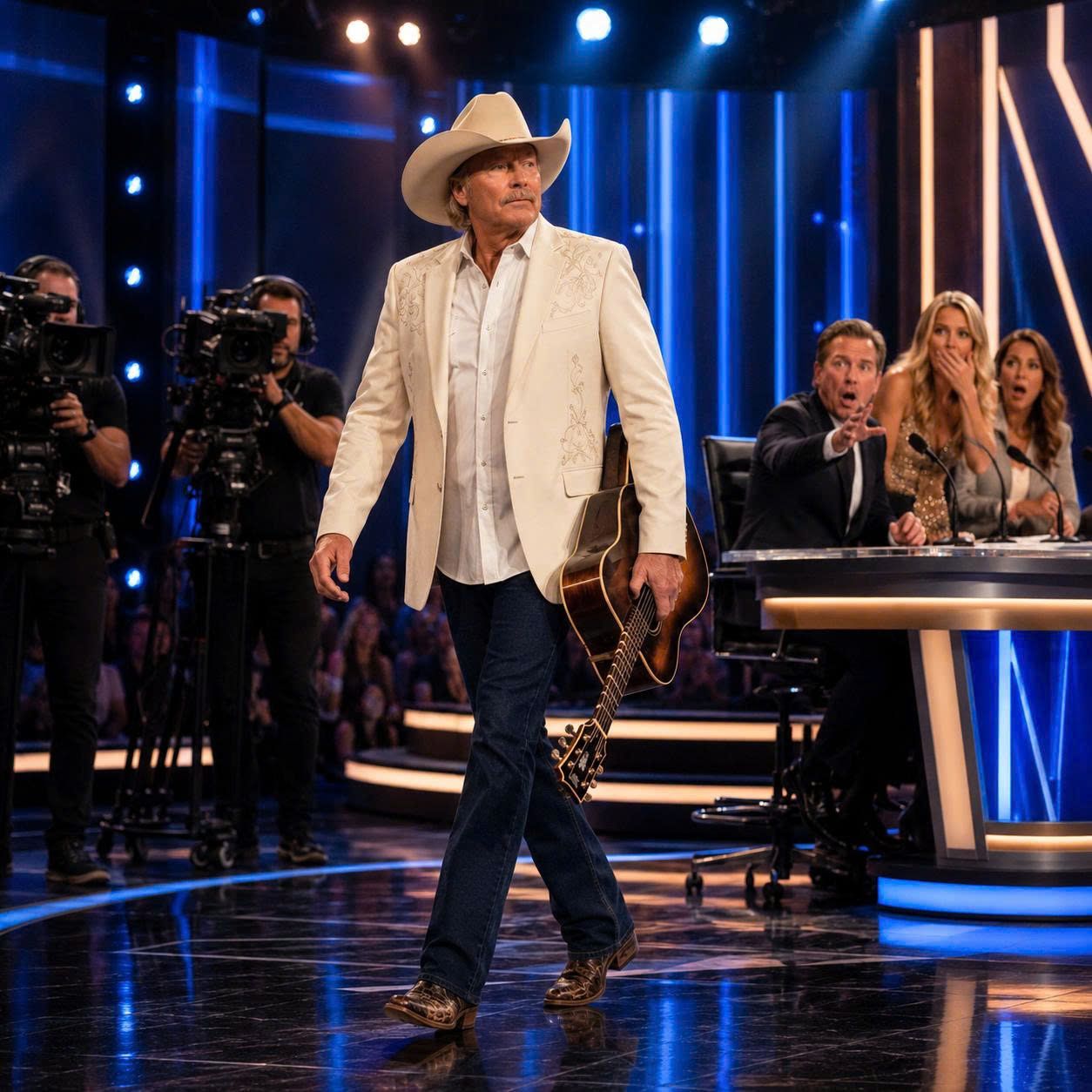
Country music has witnessed countless unforgettable moments, but few were as quietly rebellious—or as powerful—as the night Alan Jackson stunned Nashville on live television. At the 1999 CMA Awards, Jackson was scheduled to perform his hit “Pop a Top.” Everything appeared to be proceeding exactly as producers had planned. Then, without warning, one of country music’s most respected stars changed the script and delivered a protest that immediately became part of CMA history.
The controversy began with country legend George Jones. His deeply personal song “Choices” had been nominated for CMA Single of the Year following a period in which Jones had survived a near-fatal automobile accident. Yet when organizers discussed having him perform during the awards show, Jones was reportedly offered only a shortened version of the song rather than enough time to perform it in full. Feeling that the arrangement failed to show proper respect, Jones declined to attend and stayed home to watch the ceremony on television.
Alan Jackson was furious.
For Jackson, George Jones wasn’t simply another artist competing for airtime. He was one of country music’s towering figures—a singer whose influence had shaped generations. Jackson later explained that he believed Jones deserved the opportunity to sing the complete song, especially after everything the veteran performer had recently endured.
So Jackson decided to make his point in the most unforgettable way possible.
During his scheduled performance of “Pop a Top,” Jackson suddenly shifted gears. His band followed him as the familiar performance transformed into George Jones’ “Choices.” There was no long speech, no angry announcement, and no dramatic confrontation with producers. Jackson simply used his own precious television airtime to sing the song the audience had been denied the chance to hear from Jones himself.
The message was impossible to miss.
When Jackson finished, the audience rose in a standing ovation. Then he walked off the stage. Reports from the period described him leaving the ceremony and not returning for the remainder of the awards show. What made the protest so powerful was its restraint. Jackson didn’t need to shout. By sacrificing part of his own showcase, he had said everything necessary.
Back at home, George Jones was watching.
The gesture reportedly moved Jones and his wife, Nancy, to tears. For Jones, Jackson’s decision represented far more than friendship—it was a public declaration that country music should remember and respect the artists who built its foundation.
Jackson’s frustration also exposed a larger debate already growing inside Nashville: Should country music constantly chase younger audiences and crossover success, or should it continue honoring the traditional voices responsible for creating its identity? His protest became a symbol of that tension.
More than two decades later, the moment remains one of Alan Jackson’s defining acts of loyalty. He didn’t destroy anything. He didn’t deliver an angry speech. He simply changed the song, honored a legend, accepted the consequences, and walked away.
Sometimes the loudest protest is the one delivered without saying a word.