Watch the video at the end of this article.
Introduction
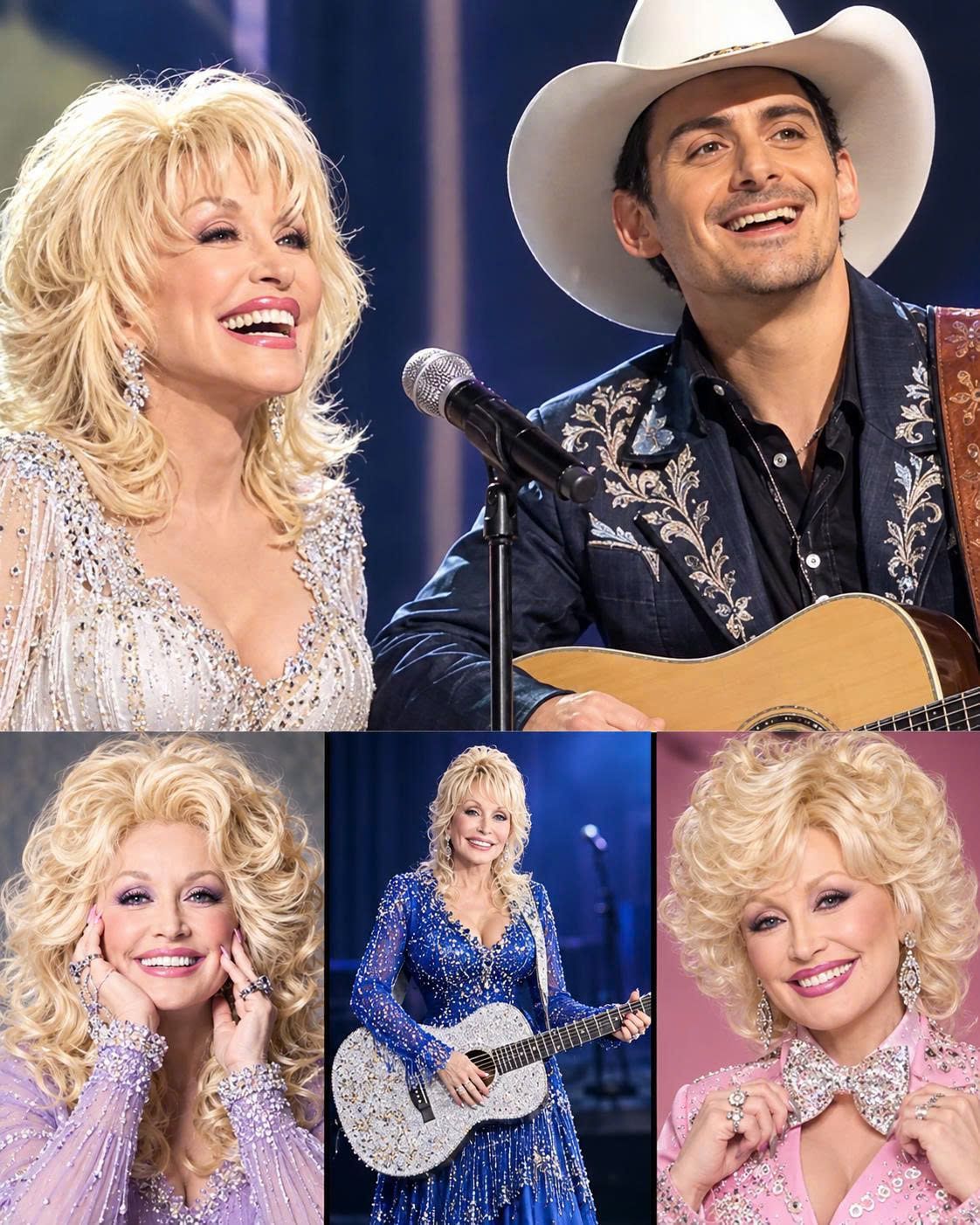
There are moments in music when a melody becomes more than a song. It becomes a memory, a prayer, and a quiet thread connecting people across years of joy and sorrow. For country music, few stories feel more deeply symbolic than the connection between Brad Paisley and Dolly Parton. Years ago, Paisley asked Dolly to lend her unmistakable voice to a gospel harmony created for families facing grief. Her voice brought warmth and reassurance to a song meant to comfort people during some of the hardest moments of their lives. Nearly two decades later, Paisley found himself standing on a quiet stage, singing that same melody again—but this time, the person he was remembering was Dolly herself.
The story carries a powerful sense of emotional symmetry. When Paisley first approached Dolly, the purpose was not simply to create another beautiful country recording. It was about offering comfort. Gospel music has long held a special place in country culture because it can speak to people when ordinary words seem insufficient. Dolly understood that language instinctively. Her voice could sound joyful, playful, or powerful, but it could also become remarkably gentle. When she added her harmony, she helped transform the song into something intimate and reassuring, the kind of music that could accompany someone through grief without pretending that grief was easy.
For Paisley, working with Dolly was also a reminder of what made her presence so distinctive. She had an extraordinary ability to make a performance feel personal, as though she were singing directly to one listener rather than thousands. Her generosity as an artist extended beyond the spotlight. Whether she was performing a country classic, a gospel hymn, or a song written for a special occasion, she brought sincerity and emotional clarity to the moment.
Years passed, as they always do, and the meaning of that old recording changed. The melody that had once been offered to grieving families eventually became part of Paisley’s own remembrance. Standing on a quiet stage, he returned to those familiar notes with a very different kind of emotion. There was no need for elaborate production or dramatic spectacle. The simplicity of the moment allowed the melody to speak for itself.
As Paisley sang, the history behind the song seemed to gather around every line. He was not only performing music that Dolly had once helped create; he was revisiting a shared artistic memory. The song had traveled from one generation of grief to another, carrying its original message of comfort while acquiring a deeply personal meaning.
That is perhaps what makes music so powerful. A song can begin as a gift to strangers and eventually become a farewell to someone who mattered. Dolly’s harmony had once helped Paisley comfort people who were hurting. Years later, Paisley’s voice could carry that same comfort back toward her memory. In that quiet exchange across time, the song became a circle.
For fans, the moment offers a poignant reminder that an artist’s legacy is not measured only by awards, records, or famous performances. Sometimes it lives in a single harmony, a familiar melody, or a song that someone remembers when words are difficult to find. Dolly gave her voice to a song created for people in sorrow, and Paisley later gave that melody back to her memory. The gesture was simple, but its meaning was profound: music can preserve love, friendship, gratitude, and remembrance long after the stage has gone silent.