Watch the video at the end of this article.
Introduction
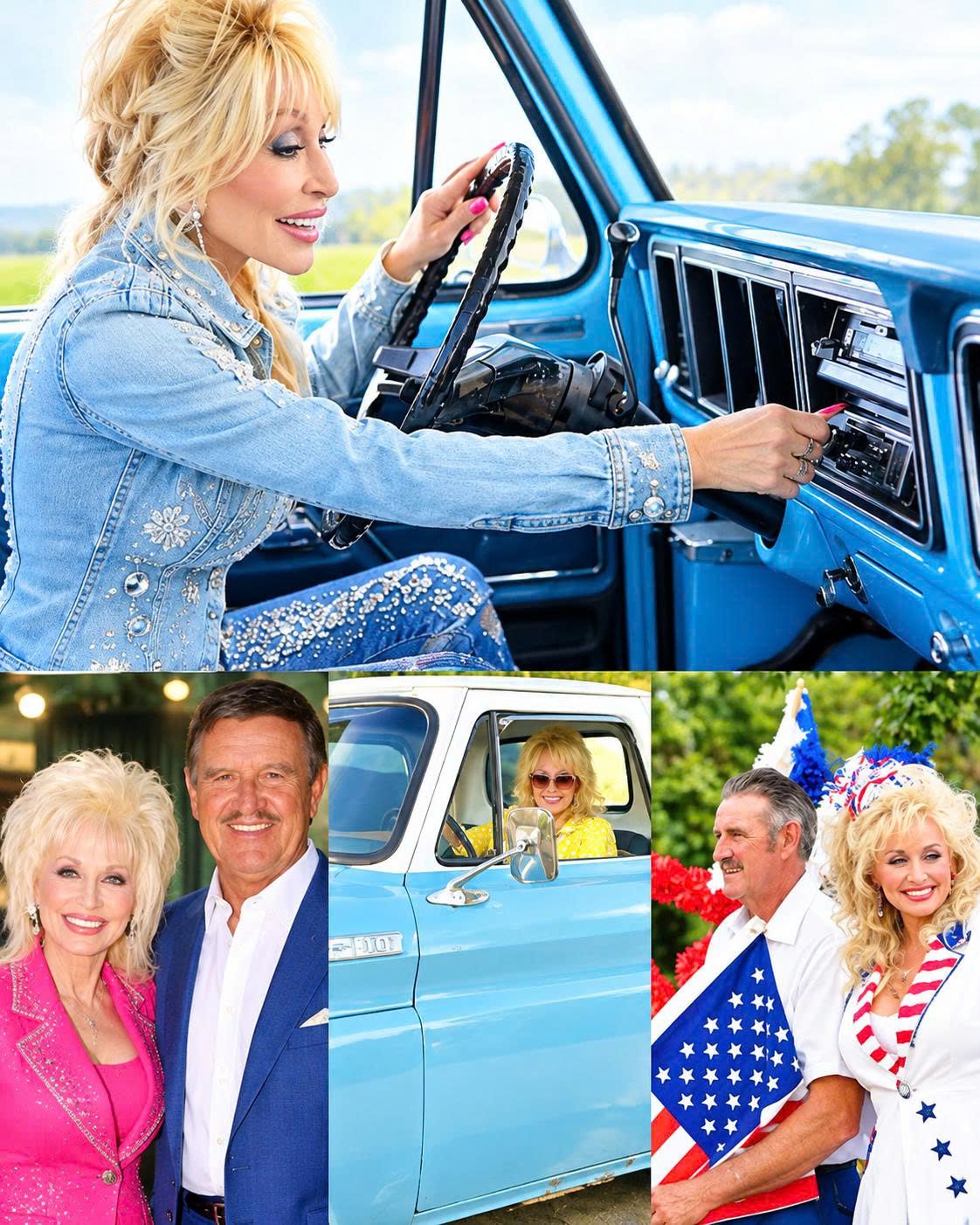
At Christmas in 1968, Dolly Parton gave her father a gift that would become one of the most touching stories of her life. It was not a diamond necklace, an expensive vacation, or anything meant to impress the world. It was a brand-new blue truck, purchased with the money she had earned through her growing success on The Porter Wagoner Show. For Dolly, the gift represented far more than a vehicle. It was a way of saying thank you to the man who had worked tirelessly throughout his life to provide for his family.
Growing up in the Great Smoky Mountains of Tennessee, Dolly knew what it meant to live with very little. Her family was large, and money was often scarce. Her father, Robert Lee Parton Sr., worked as a farmer and sharecropper, enduring long days of exhausting physical labor to help feed his twelve children. Life in the mountains demanded strength, patience, and determination. Every meal, every piece of clothing, and every small comfort came through sacrifice. Dolly witnessed those struggles from an early age, and they helped shape her understanding of hard work, family loyalty, and gratitude.
For Robert, transportation had always been a challenge. He spent much of his life walking rugged mountain paths and depending on workhorses or makeshift wagons to move people and supplies. A dependable motor vehicle was something he had never owned. Although he had devoted decades to making life better for his children, he rarely had the opportunity to enjoy luxuries for himself. His needs came second to the family’s survival, and his dreams were often pushed aside by the demands of everyday life.
By 1968, however, Dolly’s career was beginning to open new doors. Her appearances on The Porter Wagoner Show introduced her to a much wider audience, and her music was helping her establish a more dependable income. For the young singer, earning her own money was not simply about achieving personal independence. It also meant she could finally give something meaningful back to the people who had given her so much.
That Christmas, Dolly decided to use her savings to buy her father a new blue truck. Imagine the moment Robert saw it for the first time. After years of walking difficult roads and working the land with whatever tools were available, he was suddenly looking at a vehicle that belonged to him. The truck represented freedom, convenience, and a kind of comfort he had rarely experienced. It was a practical gift, but its emotional value was immeasurable.
The story also reveals something important about Dolly’s character. Even as her opportunities expanded beyond the mountains where she had grown up, she never forgot the people and experiences that had shaped her. Fame could introduce her to new audiences, but it could not erase the memories of her childhood or the sacrifices her parents had made.
For Dolly, success meant more when it could be shared. The blue truck was a symbol of appreciation for a father who had worked hard without expecting recognition or repayment. It was also a reminder that love is often expressed most powerfully through simple, thoughtful actions.
Decades later, Dolly Parton’s Christmas gift remains a beautiful illustration of family devotion. The truck was more than Robert’s first motor vehicle; it represented his daughter’s gratitude for a lifetime of sacrifice. Sometimes, the most unforgettable gifts are not the most expensive ones. They are the gifts that tell someone, without needing many words, “I remember everything you did for me, and I will never forget where I came from.”