Watch the video at the end of this article.
Introduction
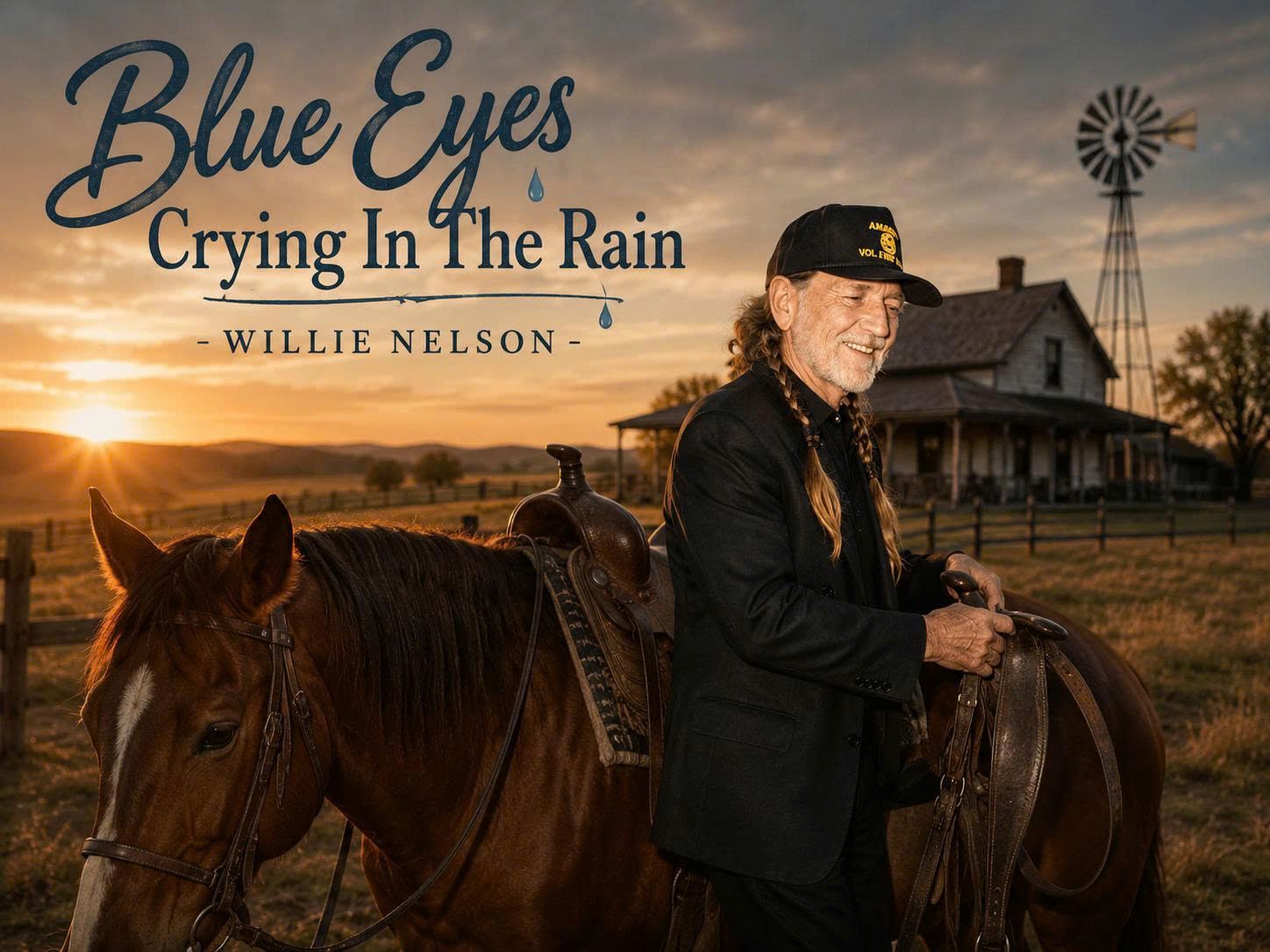
Few songs in country music history carry the emotional weight and timeless beauty of “Blue Eyes Crying in the Rain” quite like Willie Nelson’s unforgettable rendition. Released in 1975 as part of his groundbreaking album Red Headed Stranger, the song became one of the defining moments of Nelson’s career and helped establish him as one of the most influential voices in American music.
Originally written by legendary songwriter Fred Rose in 1945, “Blue Eyes Crying in the Rain” had been recorded by several artists over the years. However, it was Willie Nelson’s stripped-down, deeply personal interpretation that transformed the song into a masterpiece. Unlike the heavily produced country recordings that dominated radio at the time, Nelson chose a simple arrangement built around his distinctive guitar, “Trigger,” and his unmistakable voice. The result was intimate, haunting, and profoundly moving.
The song tells the story of lost love and the pain of separation. Through gentle lyrics and a reflective melody, the narrator remembers the last goodbye shared with someone he loved deeply. The image of blue eyes filled with tears becomes a powerful symbol of heartbreak, regret, and memories that never fade. Yet beneath the sadness lies a sense of acceptance and hope, particularly in the song’s closing lines, which suggest a reunion beyond this life.
One of the reasons the song resonates so strongly with listeners is its universality. Almost everyone has experienced loss in some form—whether through the end of a relationship, the passing of a loved one, or simply the realization that certain moments can never be relived. Nelson’s performance captures those emotions with remarkable honesty. He does not oversing or dramatize the lyrics. Instead, he delivers them with quiet sincerity, allowing listeners to connect with the story in their own way.
When “Blue Eyes Crying in the Rain” was released as a single, it became Willie Nelson’s first number-one hit on the country charts. The success of the song marked a turning point in his career. Although Nelson had already earned respect as a songwriter and performer, this recording brought him widespread recognition and helped launch the Outlaw Country movement, which challenged the conventions of mainstream Nashville music.
Over the decades, the song has remained one of Nelson’s most beloved recordings. It continues to be featured in concerts, documentaries, and tributes celebrating his extraordinary career. For many fans, it represents the essence of what makes Willie Nelson special: authenticity, emotional depth, and the ability to make simple words feel deeply meaningful.
Even today, nearly fifty years after its release, “Blue Eyes Crying in the Rain” still has the power to stop listeners in their tracks. Its gentle melody, timeless lyrics, and heartfelt performance remind us that great music does not depend on elaborate production or grand gestures. Sometimes, all it takes is a beautiful song, a sincere voice, and a story that speaks directly to the human heart.
In the vast catalog of country music classics, “Blue Eyes Crying in the Rain” stands as a shining example of artistic simplicity and emotional truth. It remains not only one of Willie Nelson’s greatest achievements but also one of the most cherished recordings in the history of American music.