Watch the video at the end of this article.
Introduction
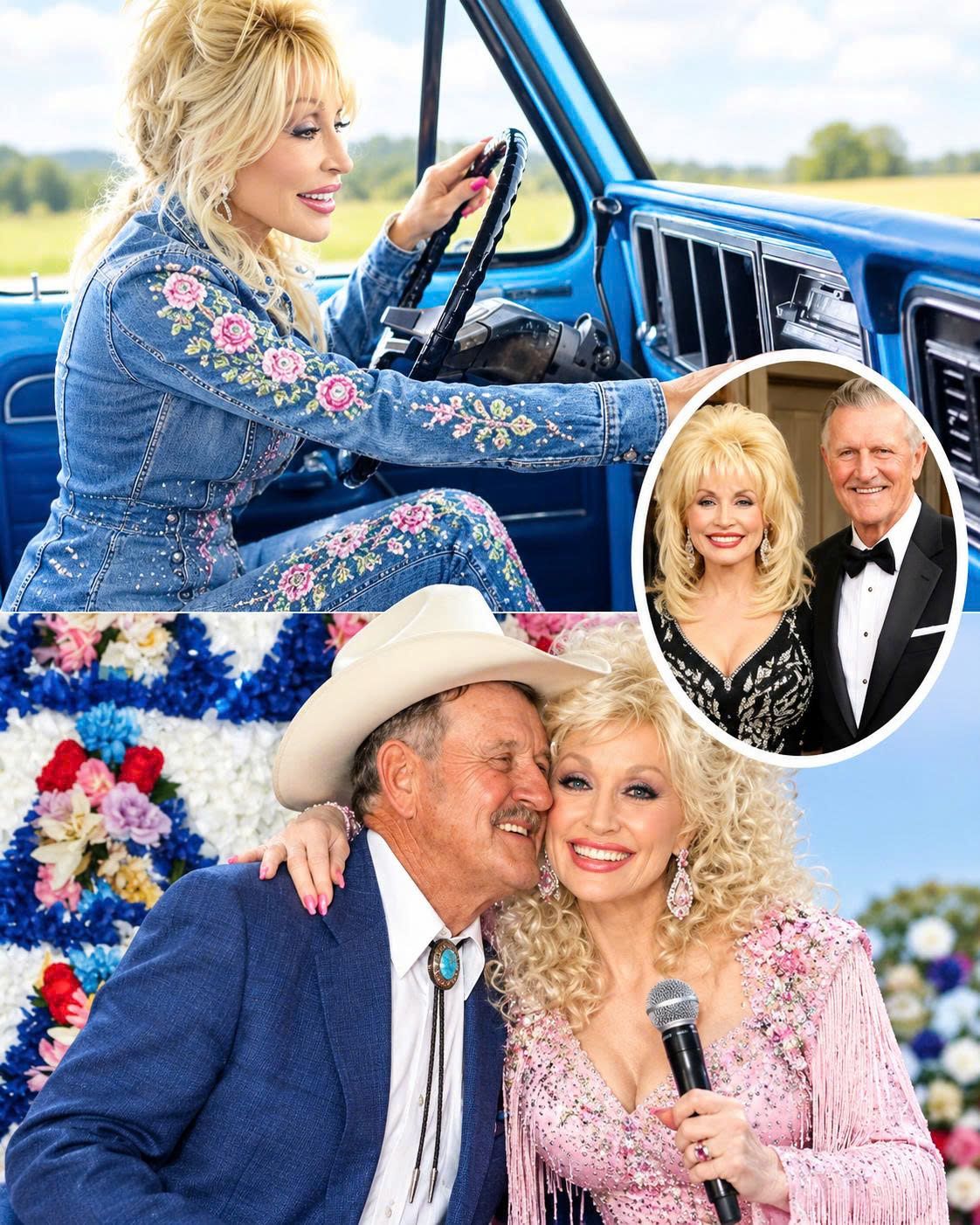
Around Christmas 1968, Dolly Parton received one of the first major paychecks of her young Nashville career, and instead of spending the money on the glamorous things that often attract a rising star, she chose a gift that carried a much deeper meaning. Dolly used that hard-earned money to buy a big blue truck for her father, Robert Lee Parton, a man who had spent most of his life walking, working, and doing whatever was necessary to provide for his family. The story of that truck captures something essential about Dolly’s character: behind the extraordinary career, the famous songs, the sparkling costumes, and the worldwide success was a daughter who never forgot where she came from.
Robert Lee Parton had raised twelve children in the mountains of East Tennessee. Life was not easy for the Parton family, and the resources available to them were limited. Their world was built around hard work and self-reliance. Mules, wagons, farm tools, and strong hands were part of everyday life. Robert worked to keep food on the table and his large family together, carrying the physical and emotional responsibilities that came with raising so many children. His hands became rough from years of labor, and walking was often simply a fact of life. There was no expectation of luxury. Every possession had to serve a purpose, and every dollar had to stretch as far as possible.
For Dolly, those early experiences never disappeared when she moved to Nashville and began building a career. Music eventually opened doors that had once seemed impossibly far away. Her songwriting brought attention, her voice connected with audiences, and her determination helped transform a girl from the Tennessee mountains into a rising country star. Yet success did not make her forget the people who had helped shape her. When her first substantial Nashville earnings arrived, she could have purchased something fashionable or extravagant. Instead, she thought about her father.
The big blue truck became more than a vehicle. It was a practical expression of gratitude. Dolly brought it back to Sevierville, Tennessee, where her father could finally enjoy something that made his difficult daily life a little easier. For a man who had spent years depending on mules, wagons, and his own feet, a truck represented freedom, convenience, and dignity. It was also Dolly’s way of saying thank you without needing a grand speech.
The gesture is especially meaningful because it happened so early in her career. Dolly had not yet become the international icon remembered by millions. She was a young woman beginning to discover what success might mean, and one of her first major purchases was connected directly to her family and her roots. The truck showed that her definition of wealth was not simply about owning more. It was about being able to give something useful to the people she loved.
Decades later, Dolly Parton’s name would become associated with extraordinary achievements in music, entertainment, business, philanthropy, and storytelling. Yet stories like the blue truck remain powerful because they reveal the personal foundation beneath the fame. Her father had spent his life giving everything he could to his children, and when Dolly finally had the means, she found a simple way to give something back. That blue truck was not merely a Christmas gift. It became a lasting symbol of a daughter remembering her father, remembering her childhood, and carrying the values of East Tennessee with her wherever her remarkable career took her.