Watch the video at the end of this article.
Introduction
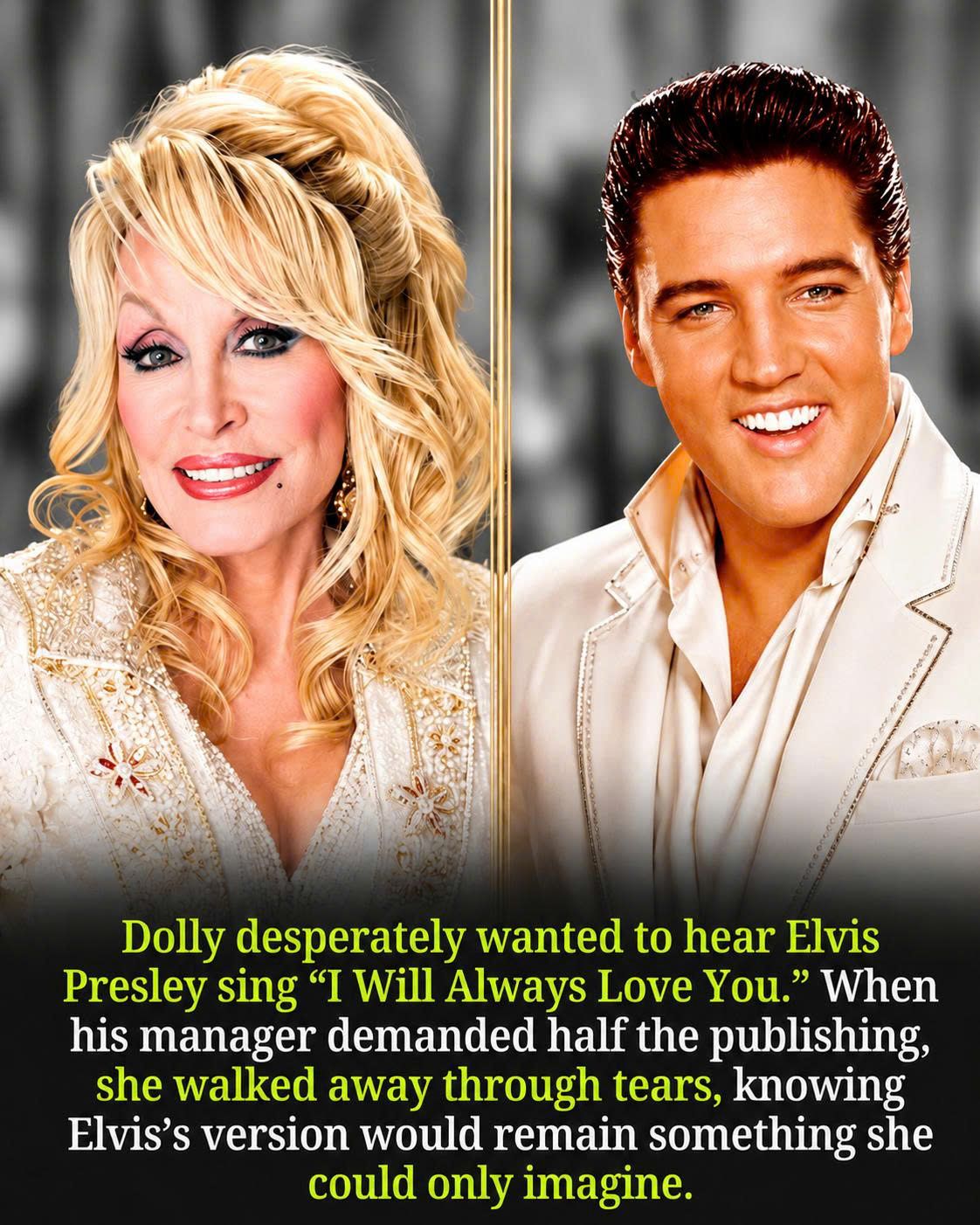
In 1973, Dolly Parton wrote “I Will Always Love You” as a deeply personal goodbye to Porter Wagoner, the country singer and television host who had helped introduce her to a national audience. Their professional partnership had begun in 1967, when Dolly joined The Porter Wagoner Show and quickly became one of its most beloved stars. At the time, Porter was already an established figure in country music, while Dolly was still fighting to prove that her voice, songwriting, and unique personality deserved a place in the spotlight. He gave her an important opportunity, encouraged her career, and helped millions of viewers discover the young singer from the mountains of East Tennessee. Together, they recorded successful duets, performed across the country, and created a musical chemistry that audiences loved. However, as the years passed, Dolly began to feel that she needed to step away from the partnership and build a career of her own. She wanted greater creative freedom, the chance to record more of her own songs, and the ability to make decisions without being tied to someone else’s television program. Porter reportedly found it difficult to accept her decision, and their conversations about separation often became emotional. Dolly understood that ordinary explanations were not reaching him, so she turned to the language she knew best: music. She went home and wrote “I Will Always Love You,” not as a song of anger or bitterness, but as a graceful expression of gratitude, affection, and farewell. The lyrics acknowledged that leaving was painful, yet necessary, and promised that the love and respect she felt would remain even after their professional relationship ended. When Dolly sang the song for Porter, he was deeply moved. He recognized that it captured everything she had been trying to say: she appreciated what he had done for her, but she could no longer stay. The song allowed Dolly to leave without denying the importance of their shared history. Released in 1974, “I Will Always Love You” became a number-one country hit and proved that Dolly could succeed as a solo artist. Years later, she recorded it again for the film The Best Little Whorehouse in Texas, and it returned to the top of the country chart. In 1992, Whitney Houston transformed the song into a powerful pop ballad for The Bodyguard, introducing Dolly’s words to a new generation and turning the composition into one of the most famous love songs in modern music. Yet beneath its global success, the song’s original meaning remains remarkably intimate. It was not written about a romantic breakup, but about the complicated moment when gratitude and independence pull a person in different directions. Dolly’s farewell to Porter Wagoner showed that endings do not always have to be cruel. Sometimes, walking away can be an act of honesty, courage, and love. “I Will Always Love You” endures because it speaks to anyone who has ever had to leave someone important while still honoring the role that person played in their life. It also revealed Dolly’s extraordinary gift for turning a difficult private experience into a universal message. Instead of attacking Porter or presenting herself as a victim, she chose tenderness. That emotional maturity gave the song its lasting strength, making it both a farewell and a sincere blessing for the future.