Watch the video at the end of this article.
Introduction
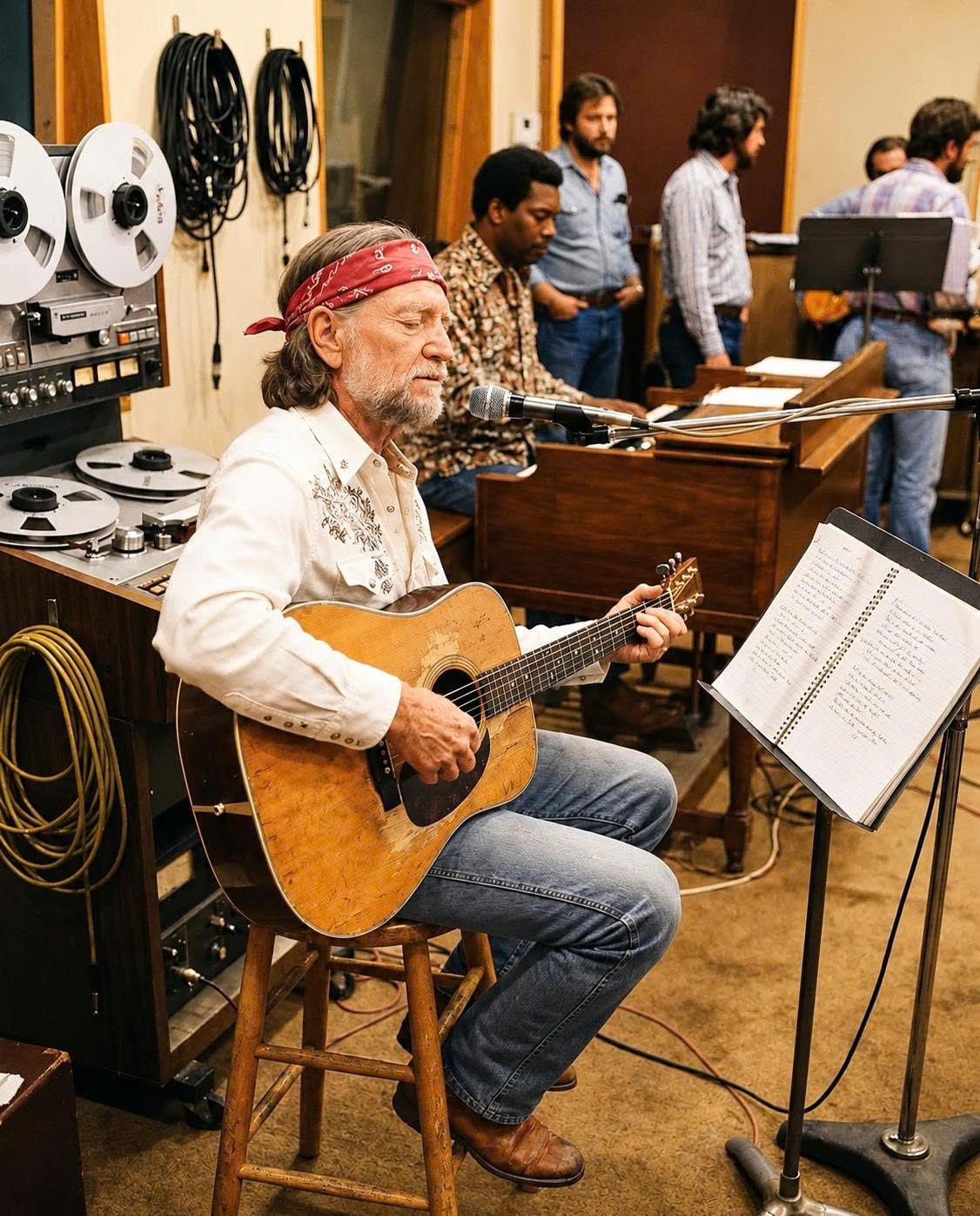
In 1978, Willie Nelson surprised nearly everyone in the music business with a decision that seemed almost impossible to understand. At the height of his success as one of country music’s most celebrated outlaw artists, he walked into a recording studio in Burbank, California alongside legendary producer Booker T. Jones with a vision that completely defied commercial expectations. Instead of recording another collection of country hits in the style that had made him famous through albums like Red Headed Stranger, Willie wanted to create something entirely different—a heartfelt tribute to the timeless pop standards and Tin Pan Alley classics of the 1920s, 1930s, and 1940s. Columbia Records reportedly believed the project would be a commercial disaster. Executives questioned why one of country music’s biggest stars would abandon the sound that had made him an icon in favor of songs that many considered outdated. Yet Willie Nelson had never been interested in following industry formulas. He believed that great songs transcend genres, generations, and trends, and he trusted his instincts more than the opinions of record executives.
The resulting album, Stardust, featured unforgettable classics such as “Georgia on My Mind,” “Blue Skies,” “All of Me,” and several other beloved standards that had been performed by countless legendary singers before him. Rather than trying to reinvent these songs with flashy arrangements, Willie approached them with remarkable simplicity and sincerity. His unmistakable voice, relaxed phrasing, and emotional delivery gave each track a deeply personal feeling. Every lyric sounded as though he had lived every word, and every melody carried the warmth of an old friend telling a familiar story. Booker T. Jones complemented that approach perfectly, crafting elegant, understated arrangements that allowed Willie’s voice and guitar to remain at the center of each performance.
When Stardust was finally released, the predictions of failure quickly proved to be spectacularly wrong. Instead of disappearing into obscurity, the album became one of the greatest successes of Willie Nelson’s remarkable career. It remained on the Billboard Country Albums chart for an astonishing number of years, eventually selling millions of copies and earning multi-platinum certification. Critics praised its timeless beauty, while listeners from every musical background embraced its gentle charm. Country fans discovered a new appreciation for American standards, while pop and jazz audiences found themselves captivated by the authenticity of a country singer who respected the songs without trying to imitate previous performers.
The success of Stardust also changed the way the music industry viewed artistic freedom. Willie Nelson demonstrated that musicians do not have to remain trapped inside the categories created by record labels or radio stations. An artist could honor different musical traditions while remaining completely true to his own identity. His interpretations were unmistakably Willie Nelson—not because he changed the songs dramatically, but because he sang them with honesty, humility, and genuine affection. His version of “Georgia on My Mind” became one of the definitive recordings of the classic, while “Blue Skies” and “All of Me” introduced younger generations to songs that had once seemed destined to fade into history.
Looking back today, Stardust stands as one of the boldest artistic gambles ever taken by a major recording artist. What Columbia Records feared would be an expensive mistake became a masterpiece that continues to inspire musicians across every genre. Nearly five decades later, the album remains a powerful reminder that true artistry is not about chasing trends—it is about believing in timeless music, trusting creative instincts, and having the courage to follow a vision even when everyone else expects it to fail. Willie Nelson didn’t simply record an album in 1978; he created a lasting testament to the enduring power of great songs and fearless creativity.