Watch the video at the end of this article.
Introduction
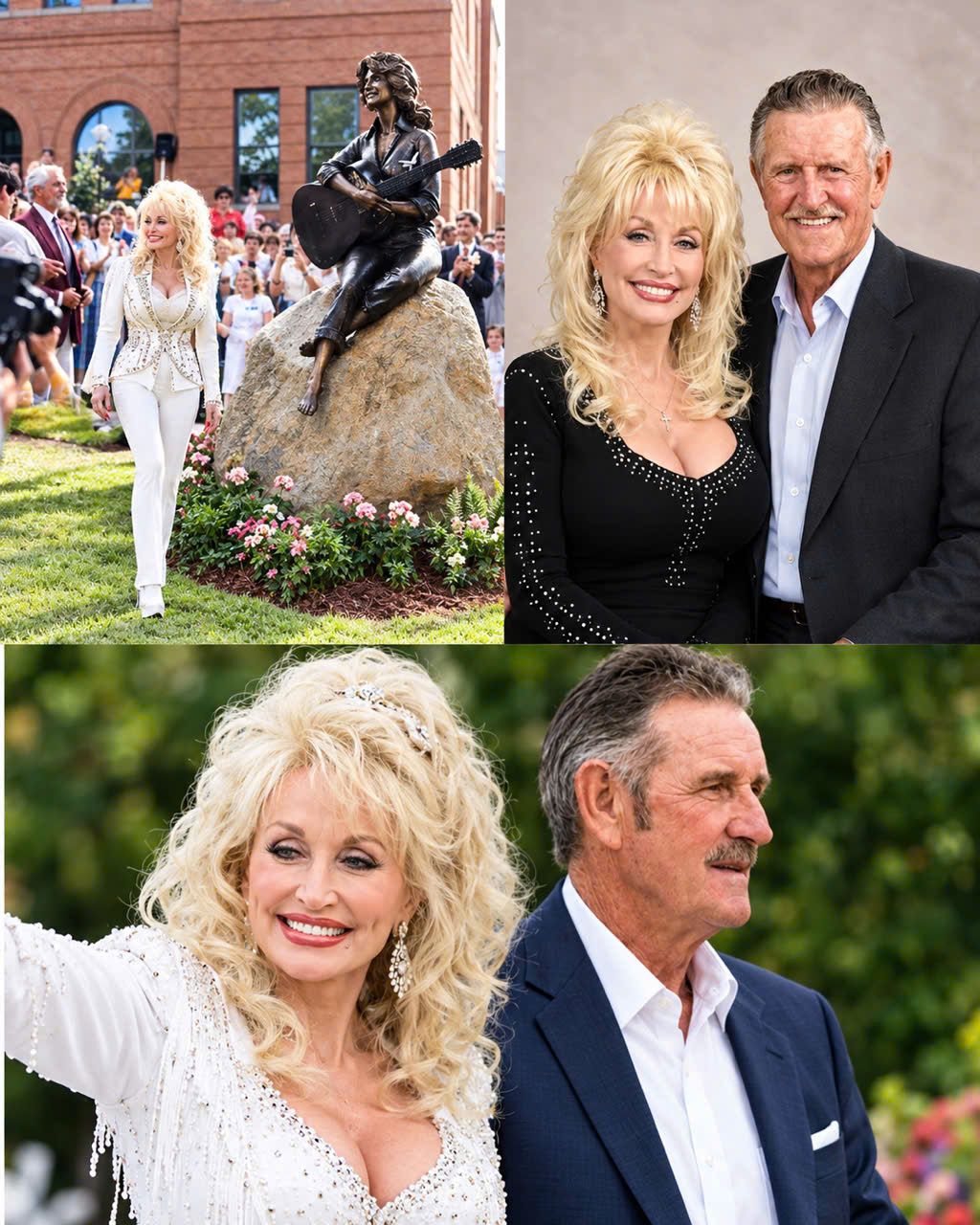
On May 3, 1987, the small town of Sevierville, Tennessee, witnessed a moment that celebrated one of its most beloved daughters. A life-size bronze statue of Dolly Parton was unveiled on the courthouse lawn, honoring the woman whose music had carried the spirit of the Smoky Mountains far beyond the hills of her childhood. Crowds gathered, cameras flashed, and people spoke proudly of the country music star who had risen from poverty to international fame. Yet somewhere behind the celebration was a quiet figure whose love for Dolly was far greater than his comfort with public attention: her father, Robert Lee Parton.
Robert was a hardworking mountain farmer and construction worker who had spent his entire life doing whatever was necessary to provide for his large family. He had grown up in a world where survival depended on physical strength, perseverance, and long hours of work. Unlike his famous daughter, Robert never learned to read or write. Lifelong poverty had denied him many opportunities that others took for granted, and as Dolly’s fame grew, he often found himself uncomfortable in a world filled with cameras, reporters, autographs, and public ceremonies.
Robert was not the kind of father who stood proudly in front of television cameras and gave interviews about his daughter’s achievements. He did not seek attention or try to become famous because of Dolly. In fact, he often seemed to prefer remaining in the background. To strangers, his silence might have looked like indifference, but those who knew the family understood that Robert expressed love differently. His affection was not found in public speeches or dramatic displays. It was expressed through hard work, sacrifice, and the quiet determination to give his children a better life than the one he had known.
That is why the story of the statue carries such emotional weight. While thousands could admire Dolly’s bronze likeness in the daylight, Robert reportedly preferred to visit the statue when the crowds were gone and the town had become quiet. In the darkness, away from cameras and curious eyes, he could stand before the image of his daughter without feeling overwhelmed by the world surrounding her fame. There was something deeply human about that private moment: a father who could not fully understand the machinery of celebrity, yet could understand perfectly the daughter he had watched grow up.
For Dolly, her father’s influence remained important throughout her life. She often spoke with affection about her parents and the lessons they taught her. Her father may not have been able to read the words printed in books or newspapers, but he understood the language of determination. He knew what it meant to work when you were tired, to keep going when life was difficult, and to love your family without expecting recognition.
The bronze statue therefore represented more than Dolly Parton’s fame. It also quietly represented the family, poverty, sacrifice, and Appalachian roots that shaped her journey. Beneath the bright lights of celebrity was a father who remained uncomfortable with fame but deeply proud of his daughter. And perhaps that is what made his nighttime visits so meaningful. In the darkness, there were no crowds and no cameras—only a father standing quietly beside his daughter’s statue, sharing a private moment of pride that words could never fully express.
Nếu bạn muốn, tôi cũng có thể viết lại đoạn này theo phong cách documentary/YouTube storytelling, với câu mở đầu gây tò mò và cảm xúc mạnh hơn.