Watch the video at the end of this article.
Introduction
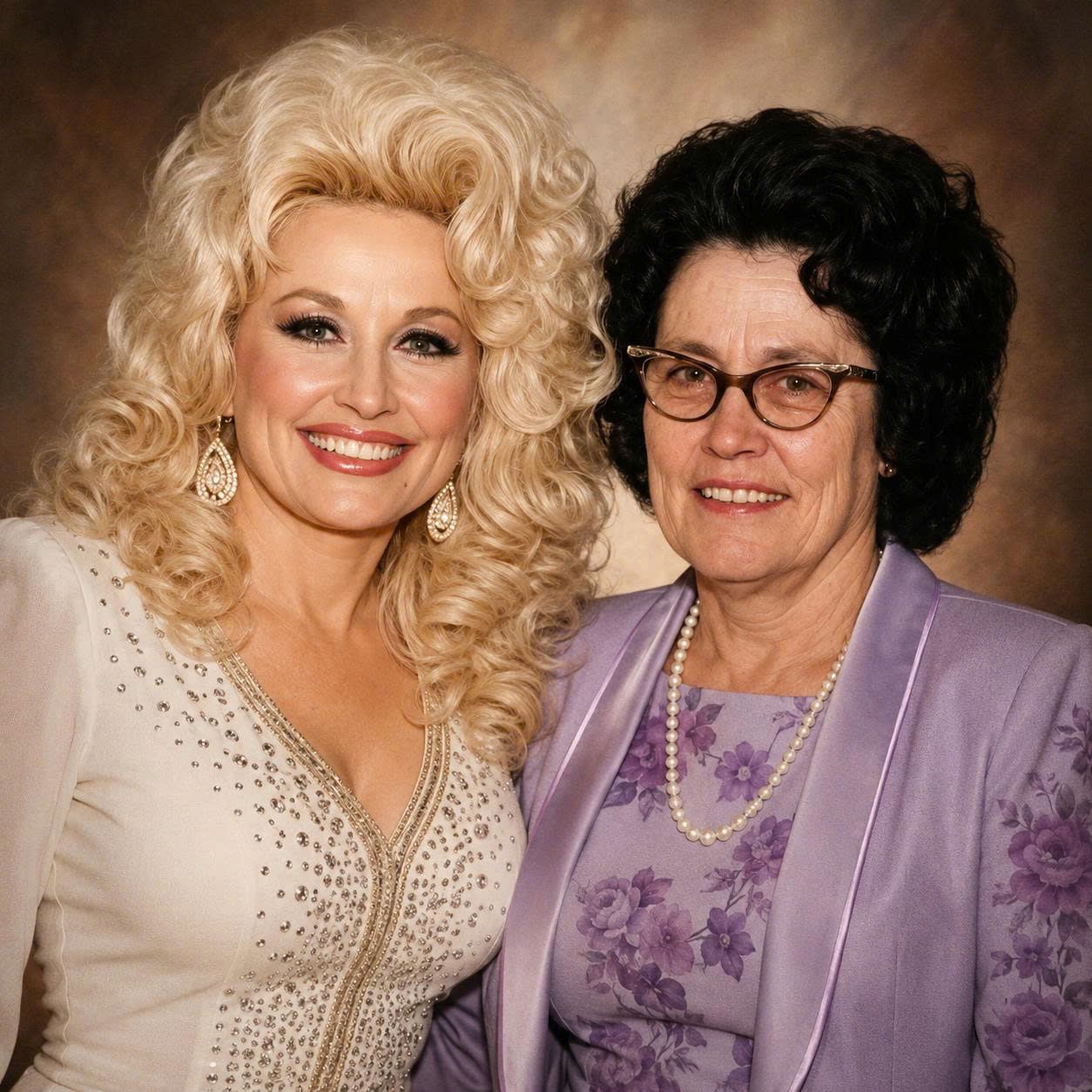
Some of the greatest songs in country music were born in expensive studios, surrounded by professional musicians and polished production. But one of Dolly Parton’s most unforgettable masterpieces began somewhere far more ordinary — on the back of a dry-cleaning receipt. The paper may have been insignificant, but the memory Dolly poured onto it had been living inside her since childhood. That song became “Coat of Many Colors,” a deeply personal story about poverty, a mother’s love, and one little girl learning that something priceless can look worthless to everyone else.
Dolly grew up as one of twelve children in a tiny cabin in the mountains of East Tennessee. Money was scarce, and new clothes were a luxury the Parton family could rarely afford. One winter, Dolly needed a coat, but her parents didn’t have the money to buy one. Instead, her mother gathered scraps of colorful fabric that had been given to the family and carefully stitched them together.
As she sewed, Dolly’s mother turned the simple coat into something magical.
She told her young daughter the biblical story of Joseph and his coat of many colors. With every stitch, Dolly began to believe her handmade coat was special — perhaps even something to be proud of. She watched her mother work, knowing that although there was little money in their home, every piece of fabric was being joined together with something far more valuable: love.
When the coat was finished, Dolly proudly wore it to school.
She expected others to see what she saw.
Instead, the children laughed.
They mocked the mismatched pieces of cloth and reminded Dolly that her family was poor. The coat that had made her feel rich at home suddenly became the reason she was humiliated in the schoolyard. For a child, that kind of cruelty could have turned into bitterness. But Dolly carried something stronger away from that painful moment.
She understood what the other children did not.
Her coat had been made by a mother who gave her time, imagination, and affection when she had little else to give.
Years later, while traveling as a successful country singer, that childhood memory suddenly demanded to become a song. Dolly reportedly began writing the lyrics while on the road, using the only paper she could find — the back of a dry-cleaning receipt associated with Porter Wagoner’s clothing.
The contrast could hardly be more perfect.
A song about having almost nothing was written on a piece of paper most people would have thrown away.
Released in 1971, “Coat of Many Colors” became one of Dolly Parton’s signature songs, but its power has never depended on chart positions or awards. Generations have connected with it because the story reaches beyond country music. It speaks to anyone who has ever been embarrassed by what they lacked, judged because of where they came from, or protected by the quiet sacrifices of a parent.
The little girl in the handmade coat eventually became one of the most beloved performers in music history.
But Dolly never forgot the lesson sewn into those colorful scraps.
Being rich was never simply about what you could afford.
Sometimes, the greatest treasure a child can wear is something made by loving hands — even when the rest of the world cannot see its value.