Watch the video at the end of this article.
Introduction
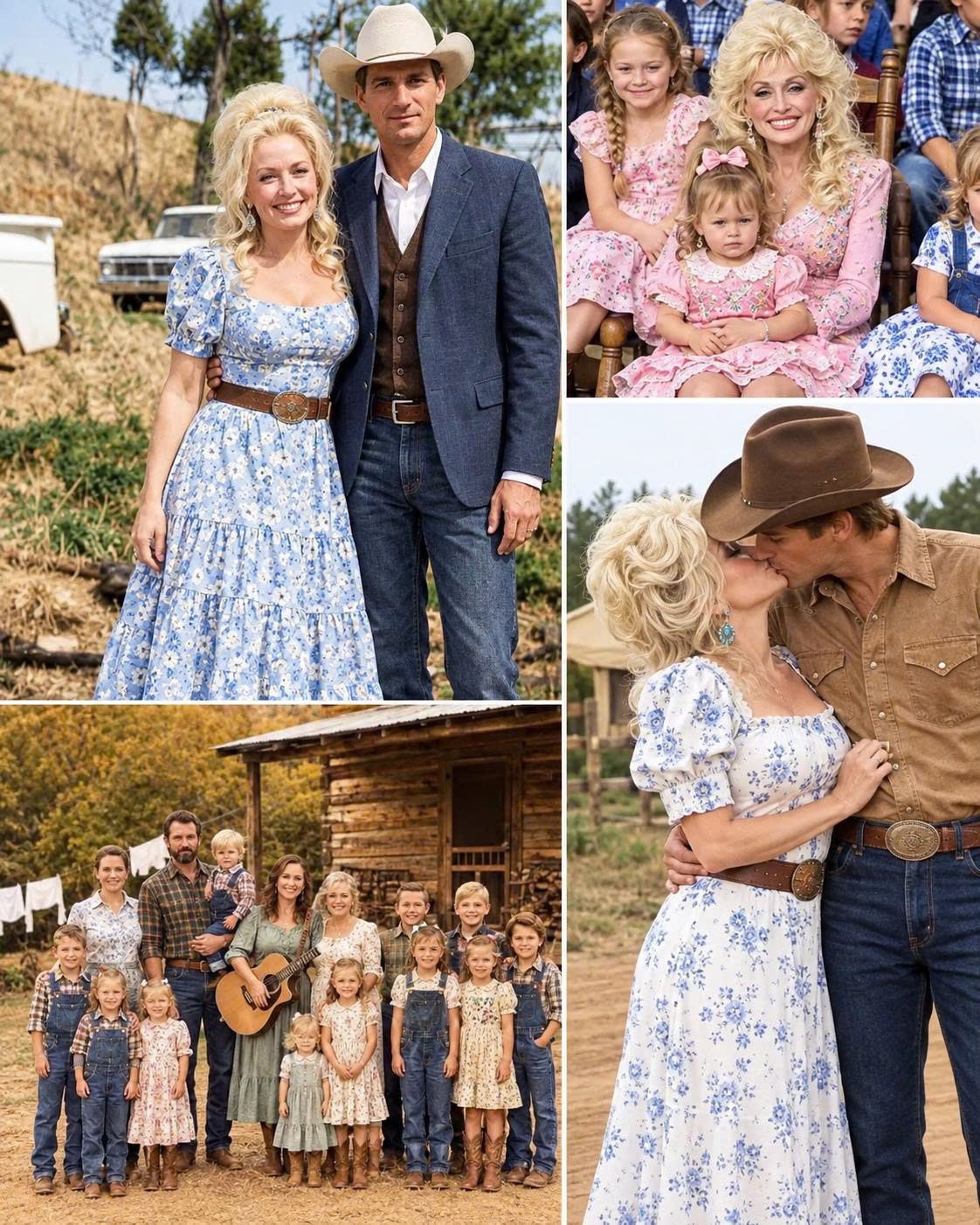
When health complications in the early 1980s ended the possibility of having biological children, Dolly Parton and her husband, Carl Dean, faced a deeply personal decision about what their future family might look like. The couple discussed adoption, considering whether they could welcome a child into their home and provide the love, security, and opportunities that every child deserves. Although adoption became part of their early conversations, Dolly and Carl ultimately chose a different path. Their decision did not mean that Dolly’s desire to nurture and care for others disappeared. In many ways, that instinct had been part of her identity since childhood.
Dolly grew up in the Great Smoky Mountains of Tennessee as one of twelve children in a poor but close-knit family. The Parton children lived together in a small one-room cabin, where privacy and material comforts were limited, but family bonds were strong. As one of the older children, Dolly learned early what it meant to help care for younger siblings. She helped nurse them when they were sick, fed them when they were hungry, and took part in the everyday responsibilities of raising a large family. Those experiences shaped her understanding of love as something practical as well as emotional. Caring for someone meant being present, offering encouragement, sharing what little you had, and helping another person grow.
When Dolly eventually left the mountains and moved to Nashville to pursue her musical ambitions, she carried those lessons with her. Her career soon expanded beyond songwriting and performing, but her affection for children and young people remained an important part of her life. Although she and Carl did not become parents in the traditional sense, Dolly found numerous ways to express the maternal instincts she had developed as a girl. She became an aunt to many nieces and nephews and remained closely connected to her extended family. Her nurturing nature also influenced the way she interacted with young fans and the communities touched by her work.
One of the clearest expressions of that commitment became the Imagination Library, the literacy program Dolly established to provide free books to young children. What began in her home region eventually grew into an international effort, giving millions of children opportunities to develop a love of reading. The program reflected something deeply personal about Dolly’s understanding of childhood: every child should have access to imagination, education, and the chance to dream beyond their circumstances.
Looking back at the adoption discussions from the early 1980s, it is possible to see how Dolly’s life ultimately developed along an unexpected path. She did not raise biological children of her own, and she and Carl did not proceed with adoption. Yet the absence of children in their household did not prevent Dolly from becoming a nurturing presence in the lives of countless others. Her childhood experiences in that tiny mountain cabin remained part of her identity, reminding her of the importance of family, generosity, and responsibility.
For Dolly Parton, motherhood was therefore not limited to biology or a traditional household. It could also be expressed through guidance, kindness, education, family relationships, and giving children reasons to believe in themselves. The choice she and Carl made was deeply personal, but Dolly’s lifelong instinct to care for others continued to shape the extraordinary legacy she built.