Watch the video at the end of this article.
Introduction
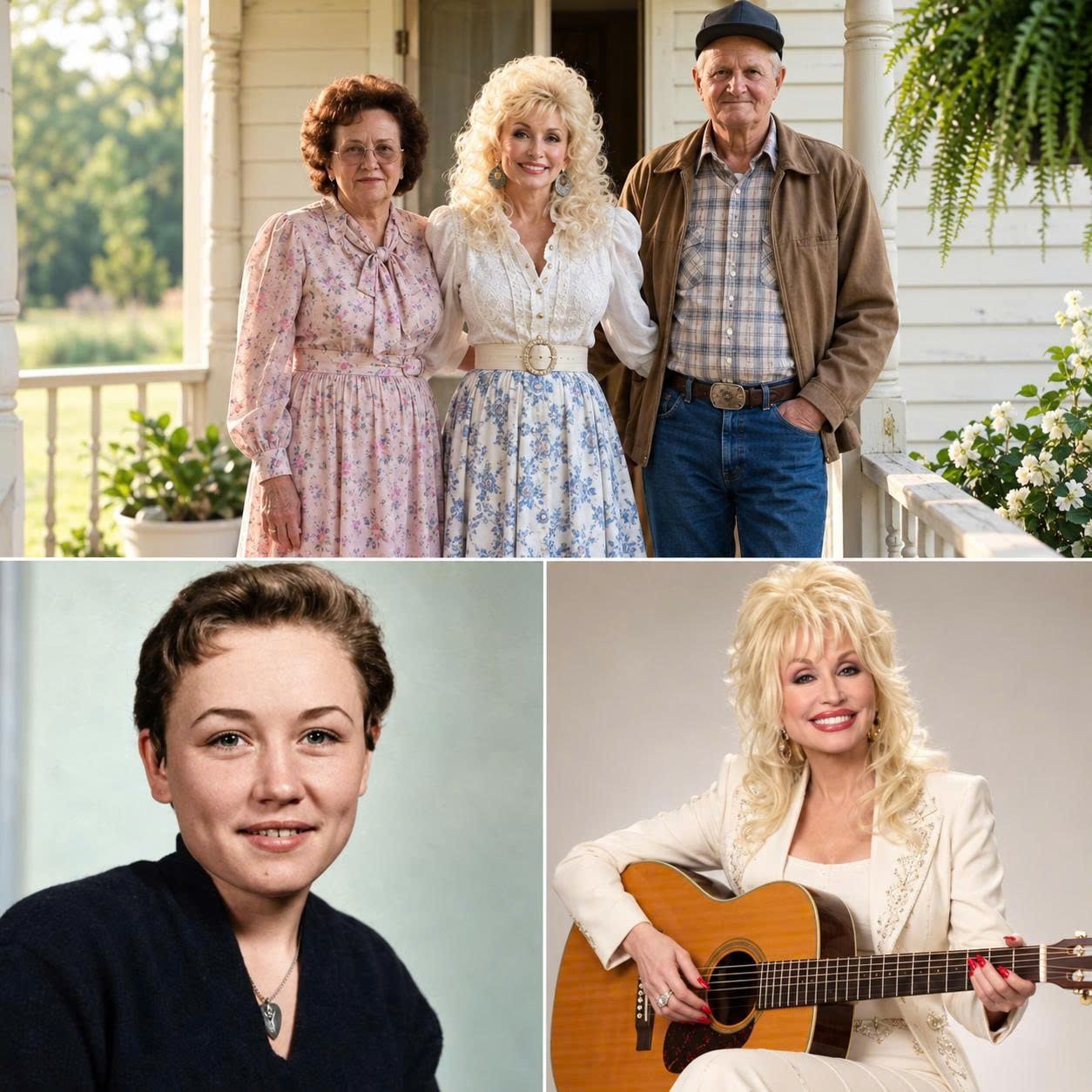
Long before Dolly Parton became one of the most recognizable stars in country music, before the glittering costumes, sold-out concerts, and decades of fame, she carried a simple promise in her heart. When her first meaningful Nashville paychecks began arriving in the late 1960s, Dolly did not immediately spend the money on glamorous clothes, expensive jewelry, or a luxurious home for herself. Instead, one of her greatest priorities was giving her parents something they had rarely known while raising twelve children: comfort and security.
Dolly grew up in the Great Smoky Mountains of East Tennessee, one of eleven siblings in a large, loving family that had very little money. Their childhood home was a small cabin, and life could be difficult. Money was scarce, winters were cold, and the family learned to make the most of whatever they had. Yet Dolly often remembered her childhood not only for its hardships, but also for its music, faith, humor, and extraordinary closeness.
Her father, Robert Lee Parton, worked tirelessly to support the family, taking on demanding jobs and doing whatever he could to provide. Her mother, Avie Lee Parton, cared for the children and filled their modest home with songs, stories, and encouragement. Dolly saw how hard both of her parents worked. Even as a little girl dreaming of becoming a singer, she understood the sacrifices they were making.
So she made herself a quiet promise: if her music ever gave her the means, she would help them.
When Dolly left Tennessee for Nashville as a young woman, success was far from guaranteed. She wrote songs, recorded music, performed wherever opportunities appeared, and slowly began building a career. Eventually, her records started gaining attention and her work brought in more money than she had ever known growing up.
But Dolly had not forgotten that childhood promise.
Rather than making herself the center of her new success, she used her earnings to improve life for her family. Among the most meaningful symbols of that change was a proper brick house for her parents, with modern comforts such as indoor plumbing. For a family that had lived so simply, the house represented far more than walls, windows, and running water. It represented security. It represented dignity. Most importantly, it represented a daughter remembering where she came from.
That decision says something powerful about Dolly Parton’s character. Her ambition was enormous, but it was never only about herself. She wanted to rise, but she also wanted to lift the people who had carried her through childhood.
Years later, Dolly would become famous not only for songs such as “Jolene” and “I Will Always Love You,” but also for her generosity and philanthropy. Yet the spirit behind those later acts of giving could already be seen when she was still a young performer trying to establish herself in Nashville.
Before the world called her an icon, Dolly Parton was a daughter keeping a promise.
Her first taste of financial success did not make her forget the tiny mountain cabin she had left behind. Instead, it gave her the opportunity to honor the two people who had sacrificed so much for her.
And perhaps that is one of the most beautiful parts of Dolly’s story: when success finally opened a door for her, one of the first things she did was hold that door open for her family.