Watch the video at the end of this article.
Introduction
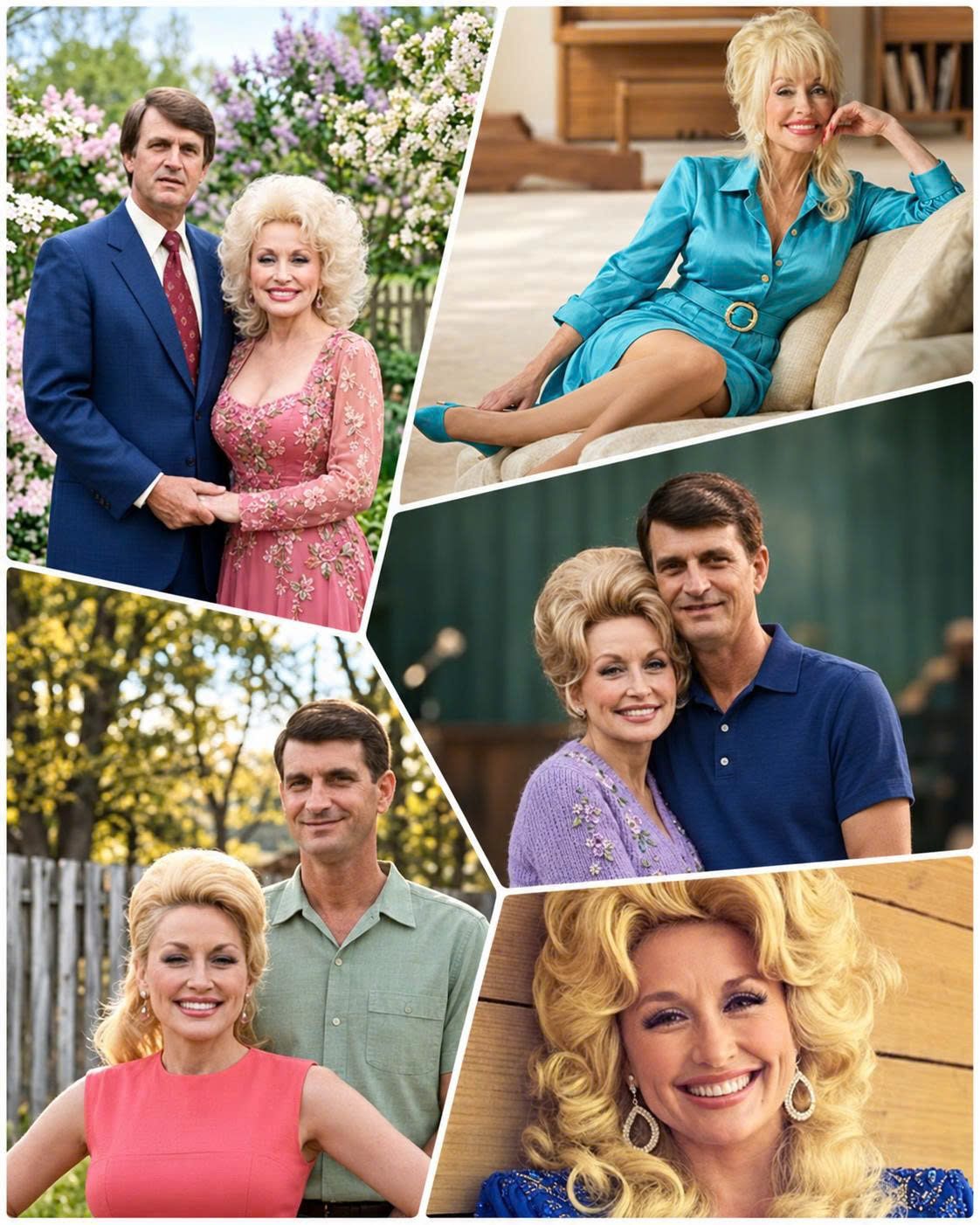
In an imagined portrait of Dolly Parton’s life after losing Carl Dean, the most powerful reminders of their marriage are not photographs displayed for visitors or treasures locked behind glass. They are ordinary belongings: a familiar pickup truck, business ledgers filled with handwriting, protective work clothes, and tools worn smooth through years of use. Across their Brentwood, Tennessee, estate, these objects become the quiet vocabulary of absence, expressing what even a gifted songwriter might struggle to put into words.
The story pictures Dolly leaving Carl’s surroundings undisturbed, allowing his possessions to remain where habit had placed them. A jacket hangs within reach. A ledger rests where someone once finished checking figures. Outside, a truck waits without its driver. Nothing about these scenes is grand, yet their simplicity makes them moving. They suggest that grief often arrives through the smallest interruptions: a door that no longer opens, footsteps that never reach the kitchen, an engine that stays silent.
Carl’s working belongings carry particular meaning in this imagined account. The ledgers associated with Dean Asphalt Paving Co. represent the practical responsibilities that shaped his days. Their pages might evoke estimates, appointments, expenses, and the satisfaction of completing a difficult job. His tools suggest patience and experience rather than celebrity. His protective clothes recall a life measured partly in physical effort, early mornings, and work that left visible marks on both fabric and hands.
For a woman whose public world glittered with stage lights, those everyday objects could symbolize the steadiness of home. They belong to a different rhythm, one untouched by applause or performance schedules. In this telling, preserving them is less about refusing reality than protecting a familiar connection. Moving a coat might feel unexpectedly final. Clearing a workbench might seem like erasing a sentence before she has finished reading it. Leaving things alone gives sorrow room to breathe.
Still, the emotional truth of such a story does not require us to claim access to Dolly’s private thoughts. Nobody outside a household can know exactly what a particular object means to the person who keeps it. A truck may hold memories of shared journeys. A handwritten number may recall an ordinary conversation. A battered tool may bring back the sound of someone working nearby. These meanings are personal, sometimes impossible to explain, and no less powerful for remaining unspoken.
There is tenderness in imagining that the estate continues to shelter traces of two lives lived together. The grounds are not simply a setting for loss; they are also a landscape of accumulated companionship. Everyday routines leave impressions that survive their participants. A familiar parking place, a doorway, or a shelf can become a meeting point between past and present, offering comfort on one day and heartbreak on another.
Ultimately, this fictional reflection is about the dignity of remembering without a deadline. Belongings need not be expensive to become irreplaceable, and keeping them need not follow anyone else’s timetable. In the stillness of an untouched room or beside an aging pickup, love can remain attached to the ordinary. The imagined image of Dolly preserving Carl’s things speaks to a widely shared experience: after someone beloved is gone, the smallest objects can carry the greatest weight, holding memories close until their keeper decides, in her own time, what comes next, and what will always belong to the life they built.