Watch the video at the end of this article.
Introduction
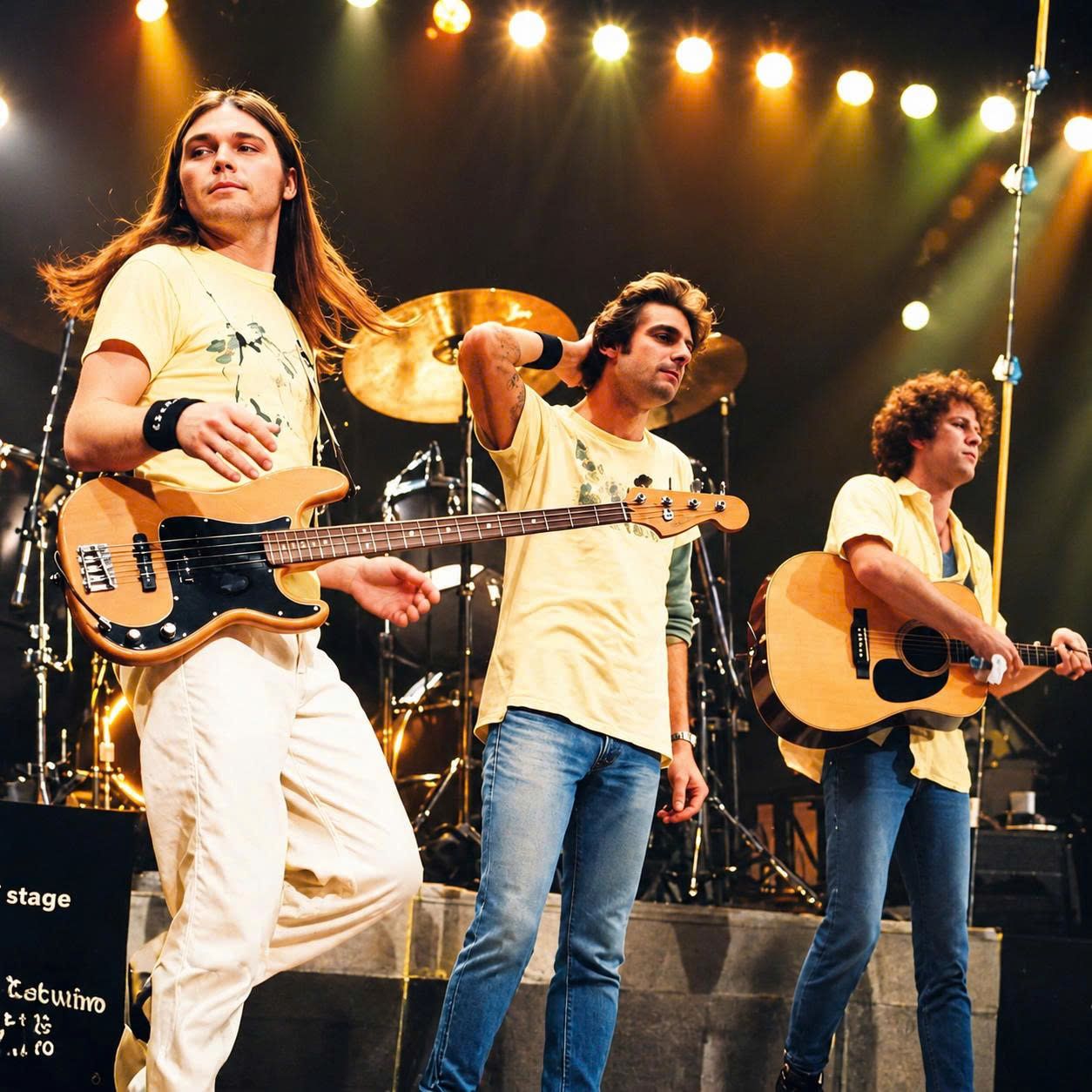
Bernie Leadon has often been remembered as the Eagles’ quiet traditionalist—the gifted guitarist who infused the band’s early sound with bluegrass, country, and folk influences. While Don Henley and Glenn Frey frequently stood in the spotlight as the group’s principal songwriters, Leadon possessed a fascination with American frontier history that few fans fully appreciated. That fascination eventually inspired one of the Eagles’ darkest and most overlooked recordings, a haunting deep cut that drew directly from the violent life of outlaw George “Bitter Creek” Newcomb. Unlike the glamorous legends often associated with the Old West, Newcomb was a genuinely ruthless killer whose bloody reputation spread throughout the frontier during the late nineteenth century. Rather than celebrating the outlaw as a romantic hero, Leadon became intrigued by the psychological burden of living every day as a hunted man. He wondered what it felt like to constantly glance over one’s shoulder, never trusting another soul, knowing that every sunrise could be the last. That unsettling question became the emotional foundation for the chilling song “Bitter Creek,” featured on the Eagles’ landmark 1973 album Desperado. Although the album revolved around the mythology of Western outlaws, Leadon’s contribution stood apart because it explored fear instead of glory. The lyrics paint a lonely figure hiding in isolation, consumed by suspicion and haunted by the consequences of his own choices. There are no triumphant gunfights, no heroic victories, and no romantic adventures. Instead, listeners are immersed in an atmosphere of paranoia, exhaustion, and quiet despair. Leadon’s gentle, almost fragile vocal performance only deepens the contrast, making the narrator sound less like a fearless gunslinger and more like a broken man trapped inside a prison of his own making. During the recording sessions in London, the Eagles carefully layered acoustic guitars, subtle harmonies, and understated instrumentation to create an eerie sense of wide-open emptiness. The sparse arrangement allows every lyric to linger, giving the impression of endless desert landscapes where danger could emerge from any direction. It was an artistic choice that perfectly matched the emotional weight of the story. While songs like “Desperado,” “Tequila Sunrise,” and “Outlaw Man” eventually became classics, “Bitter Creek” quietly slipped into the shadows of the album, earning admiration from devoted fans but remaining largely unknown to mainstream audiences. Ironically, that obscurity may have preserved its mysterious power. Unlike many songs that lose their impact through constant radio play, “Bitter Creek” still feels like a hidden discovery waiting to be uncovered. Looking back today, the song also offers a fascinating glimpse into Bernie Leadon’s creative personality before his departure from the Eagles just a few years later. His love of American history, traditional storytelling, and acoustic authenticity gave the band’s early catalog a depth that balanced the increasingly commercial direction they would later pursue. For listeners willing to venture beyond the greatest hits, “Bitter Creek” reveals a remarkably sophisticated piece of songwriting that refuses to glorify violence, instead exposing the emotional emptiness behind the outlaw myth. What initially appears to be a simple Western ballad slowly transforms into a timeless meditation on guilt, isolation, and the unbearable cost of living outside the boundaries of humanity. More than fifty years after its release, this forgotten masterpiece remains one of the Eagles’ most atmospheric recordings, proving that Bernie Leadon’s darkest inspiration produced one of the band’s richest artistic achievements.